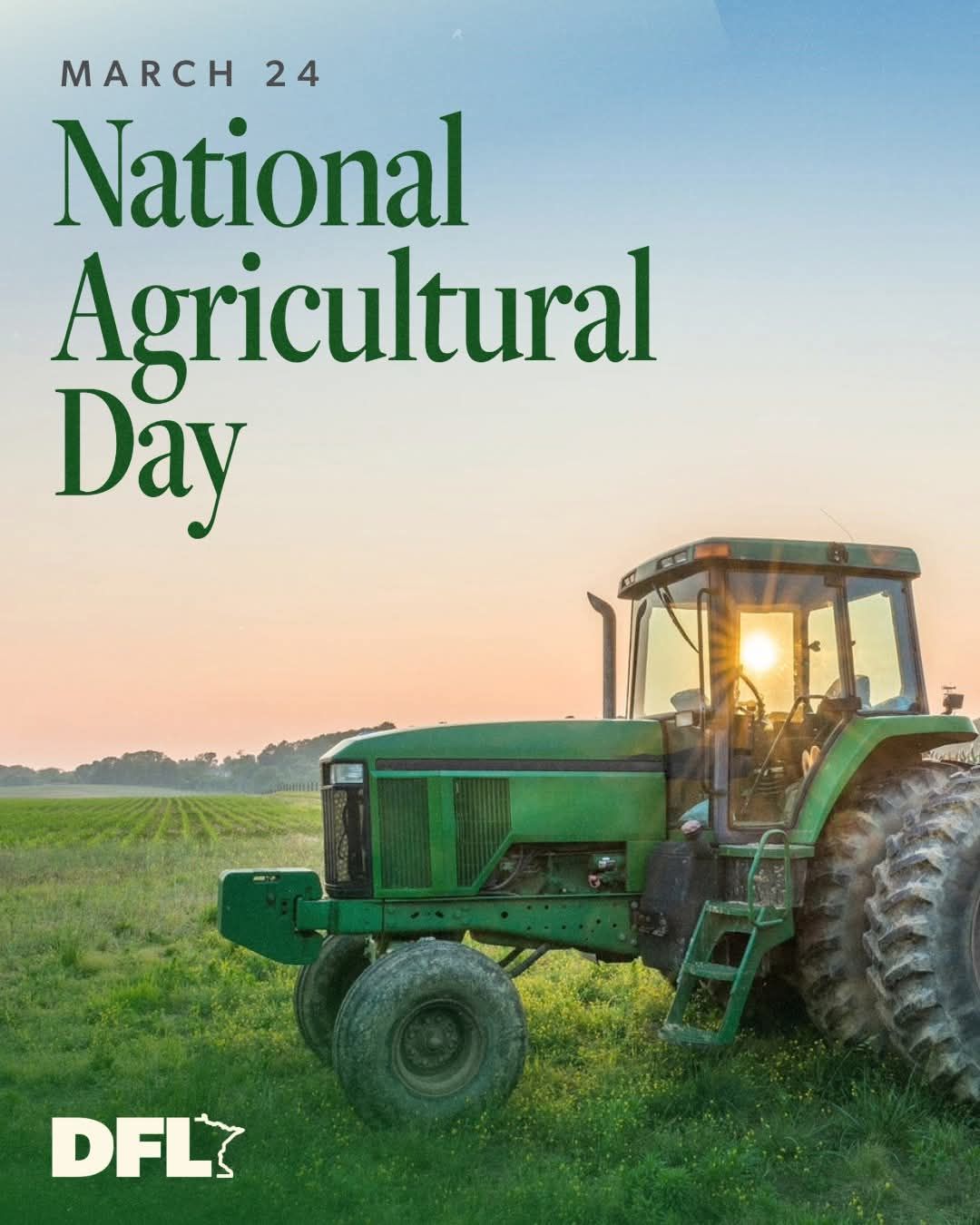
ARLINGTON, MN — For five generations, my family has worked the land and milked cows here in Sibley County. Since 1886, our farm has endured droughts, market crashes, floods, and generational transitions. And through all those years, one phrase has been repeated like gospel in every town hall, coffee shop, and county fair across our region:
“Agriculture is the backbone of rural Minnesota.”
I grew up believing that with all my heart, and I still believe it today. Farming feeds our state, anchors our heritage, and drives our local economy.
"A community cannot stand on just one backbone. If you only have one pillar supporting the weight of an entire town, any shock to the system can bring the whole structure down. Rural Minnesota has multiple backbones — and the two strongest, most essential are Agriculture and Public Education." — Ben Wieman
A Realization from the Campaign Trail
Over the past several months, I’ve traveled thousands of miles across District 17B. I’ve knocked on screen doors in Arlington, Gaylord, and Glencoe; sat down in machine sheds and church basements in Winthrop and Henderson; and walked through high school shop classes and elementary classrooms throughout our counties.
Listening to parents, teachers, paraprofessionals, and young farmers, I reached a conclusion that has fundamentally reshaped how I view the mission of this campaign:
A healthy rural community cannot stand on a single backbone.
When politicians talk about rural Minnesota, they almost always talk about agriculture as our sole lifeline. But a living community has multiple vertebrae. Alongside our farms, our public school system is our second foundational backbone.
These two pillars do not compete; they are completely intertwined. When one fractures, the other bends. When both are strong, our small towns are unbreakable.
Why Family Farms Need Great Rural Schools
Too often, policy debates treat agricultural policy and education funding as if they live on separate planets. In reality, you cannot save family agriculture without defending rural schools:
- The Generational Farm Succession Crisis: Ask any older farmer what their biggest worry is, and they’ll tell you: “Will the kids come back to take over the farm?” When young farm couples decide whether to return to rural Minnesota to take over a multi-generational operation, the very first question they ask isn’t about corn prices — it’s about the local elementary school. If small-town schools are underfunded, class sizes are swelling, and specialized programs are being cut, young families will not move back. Without young families, family farms don't transition — they get sold off to corporate conglomerates and absentee investment firms.
- Modern Agriculture Demands Modern Classrooms: Today’s agriculture isn't just tractors and shovels. It is precision GPS agronomy, drone crop scouting, robotics, automated dairy systems, veterinary science, and sophisticated financial risk management. The young people sitting in our local 5th-grade and 9th-grade classrooms today are the precision ag leaders, agronomists, diesel mechanics, and cooperative managers of tomorrow. Strong rural schools are the research-and-development arm of rural agriculture.
Why Rural Schools Need Strong Family Farms
The relationship runs equally deep in the opposite direction. Rural school districts cannot thrive when independent family farms are being pushed off the land:
- Enrollment Follows Independent Farms: When ten independent family farms are consolidated into one massive corporate operation, ten families with twenty school-aged children are replaced by absentee ownership and seasonal contract labor. Rural school enrollment plummets, triggering state per-pupil funding cuts, staff layoffs, and eventually, the heartbreak of school closures and town consolidations.
- Ending the False Conflict of Local Property Tax Referendums: For decades, state lawmakers in St. Paul have failed to fully fund rural schools, forcing local school boards into divisive operating levy referendums. Because farmers own large acreage, a local property tax increase can add thousands of dollars to a farmer’s overhead while a town lot pays a fraction. This creates an artificial, toxic conflict between farmers who feel overburdened and educators who feel underfunded.
This is a false choice. The answer is not to starve our classrooms or burden family farmers. The answer is to reform state funding formulas so St. Paul pays its fair share, while holding multi-state corporate monopolies and agribusiness conglomerates accountable to pay their fair share in Minnesota taxes.
Practical Synergy: What Multiple Backbones Look Like
Recognizing that Agriculture and Education are twin backbones unlocks practical, common-sense solutions that benefit both:
- Expanding Farm-to-School Initiatives: State dollars should incentivize school districts to buy fresh milk, beef, pork, poultry, and vegetables directly from local family farms right here in District 17B. This feeds students nutritious, locally grown food while keeping taxpayer money circulating directly in our local farm economy.
- Investing in Hands-On Career & Technical Education (CTE) and FFA: Every rural high school in District 17B should have fully equipped agricultural science labs, welding shops, and diesel mechanics bays. We must ensure every student has a pathway to high-paying skilled trades and modern farming without taking on insurmountable debt.
- Tackling Rural Brain Drain Together: Beginning farmers and beginning teachers face nearly identical hurdles: crushing student debt, sky-high startup and equipment costs, and an acute shortage of affordable rural housing. State programs that offer targeted student loan forgiveness and rural housing grants can solve both shortages simultaneously.
Putting the 'F' Back in DFL
The Democratic-Farmer-Labor party was founded on the historic truth that the people who work the land (the Farmers) and the people who work in our classrooms, trades, and clinics (the Labor) share the exact same interests against corporate exploitation and neglect from St. Paul.
When I look at District 17B, I don't see a choice between investing in our farms or investing in our schools. I see two pillars that must lean on one another.
When we strengthen both backbones, we don't divide our rural strength — we double it.
Ben Wieman is a fifth-generation dairy farmer running for the Minnesota House of Representatives in District 17B. To learn more about Ben's platform on family farms and rural schools, visit the Priorities Page or read about his official endorsements.